How to Pass the YKI Test – Complete Guide for Success
The YKI test (Yleinen kielitutkinto, or General Language Proficiency Test) is Finland's official language proficiency assessment. Whether you're pursuing Finnish citizenship, a work permit, or university admission, this comprehensive guide will help you understand the test structure and develop winning strategies for success.
Every year, thousands of people take this test to demonstrate their Finnish language skills. With proper preparation and the right approach, you can join the ranks of successful test-takers. This guide covers everything you need to know.
📊 Understanding the YKI Test Structure
What Does the YKI Test Measure?
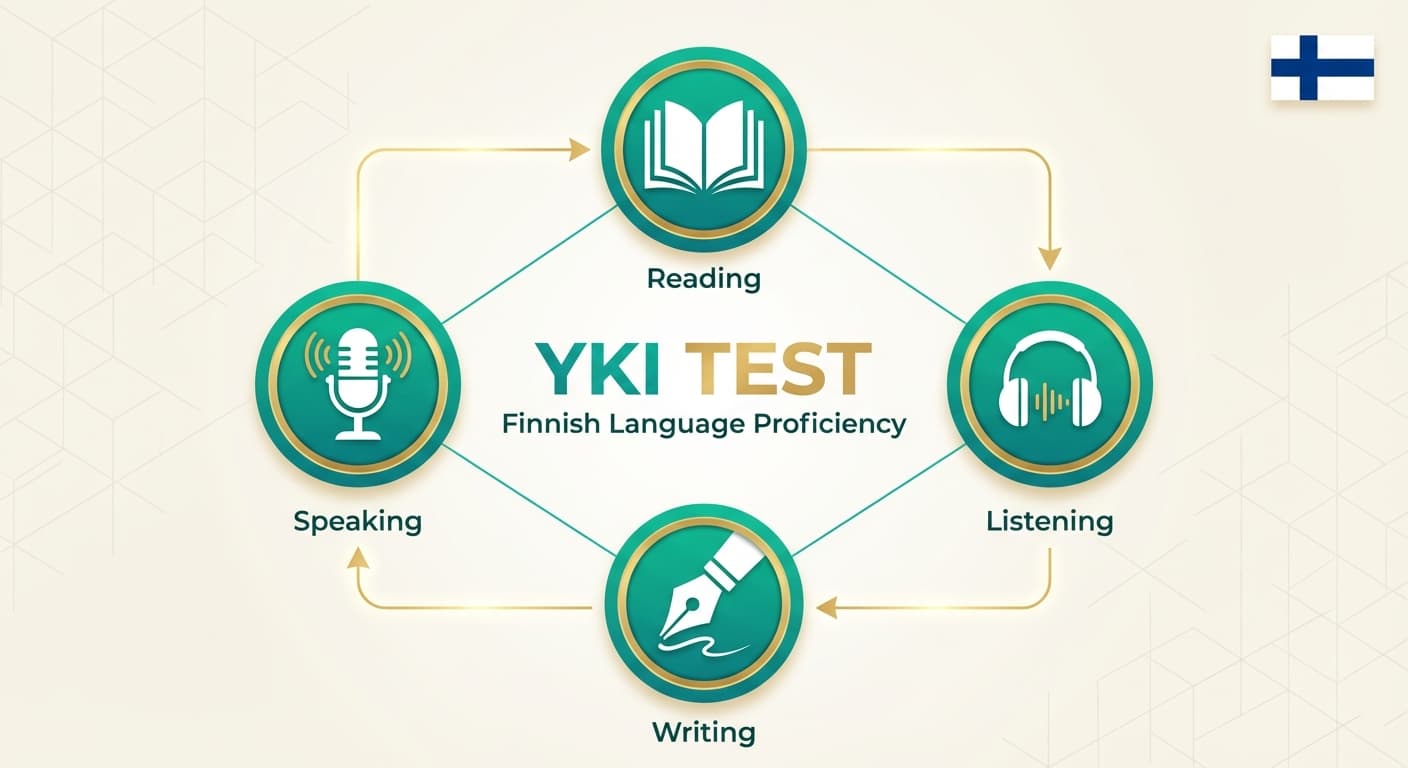
The YKI test evaluates practical language skills across four key areas. Unlike purely academic tests, it focuses on your ability to communicate in real-life situations. You'll need to demonstrate:
- Reading comprehension – Understanding written texts in various contexts
- Writing skills – Producing clear, purpose-appropriate written content
- Listening comprehension – Understanding spoken Finnish at natural speeds
- Speaking ability – Communicating orally in everyday situations
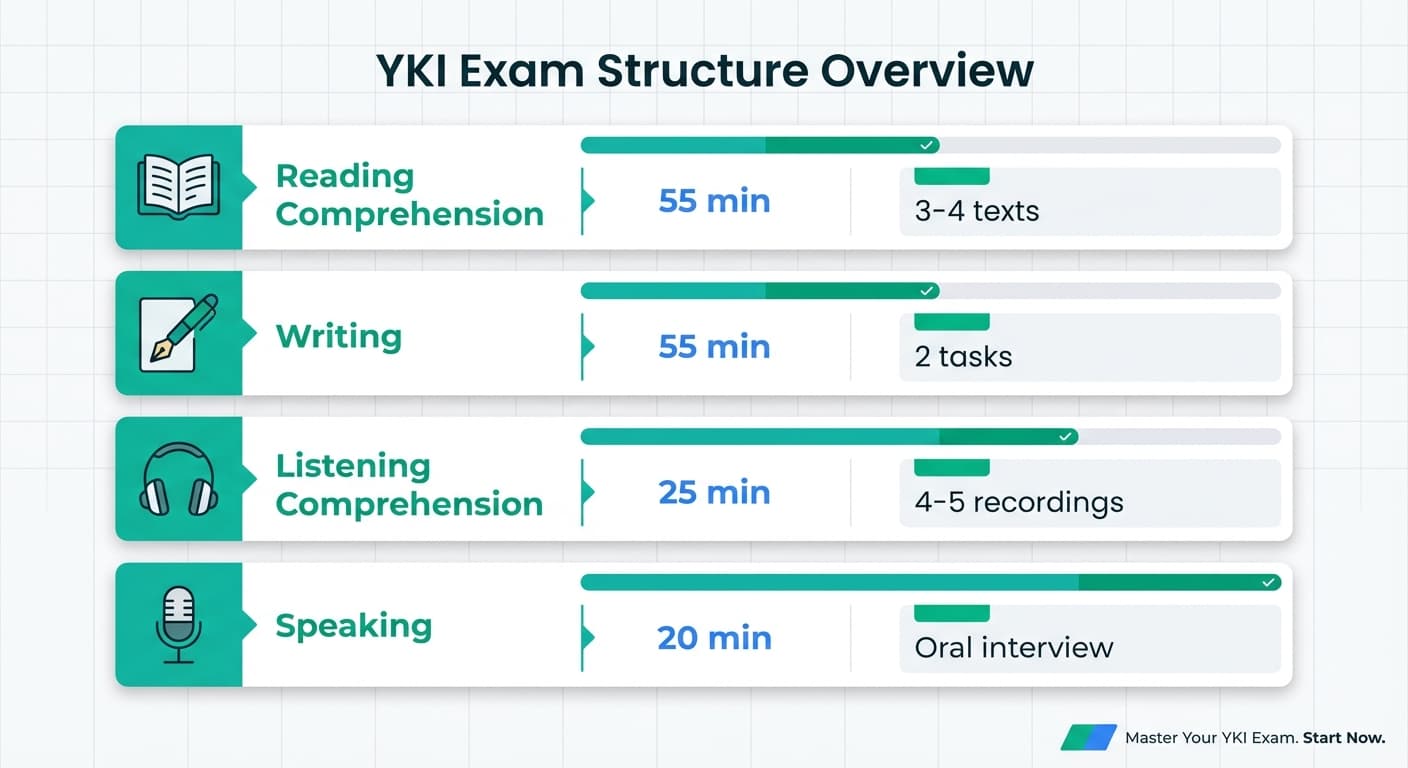
Test Structure in Detail
| Section | Duration | Task Types | Number of Tasks |
|---|---|---|---|
| Reading (Tekstin ymmärtäminen) | 55 min | Multiple choice, gap-fill, matching | 3-4 texts |
| Writing (Kirjoittaminen) | 55 min | Messages, texts, responses | 2 tasks |
| Listening (Puheen ymmärtäminen) | 25 min | Listening tasks, multiple choice | 4-5 recordings |
| Speaking (Puhuminen) | 20 min | Oral interview | 4-5 tasks |
The Three YKI Levels Explained
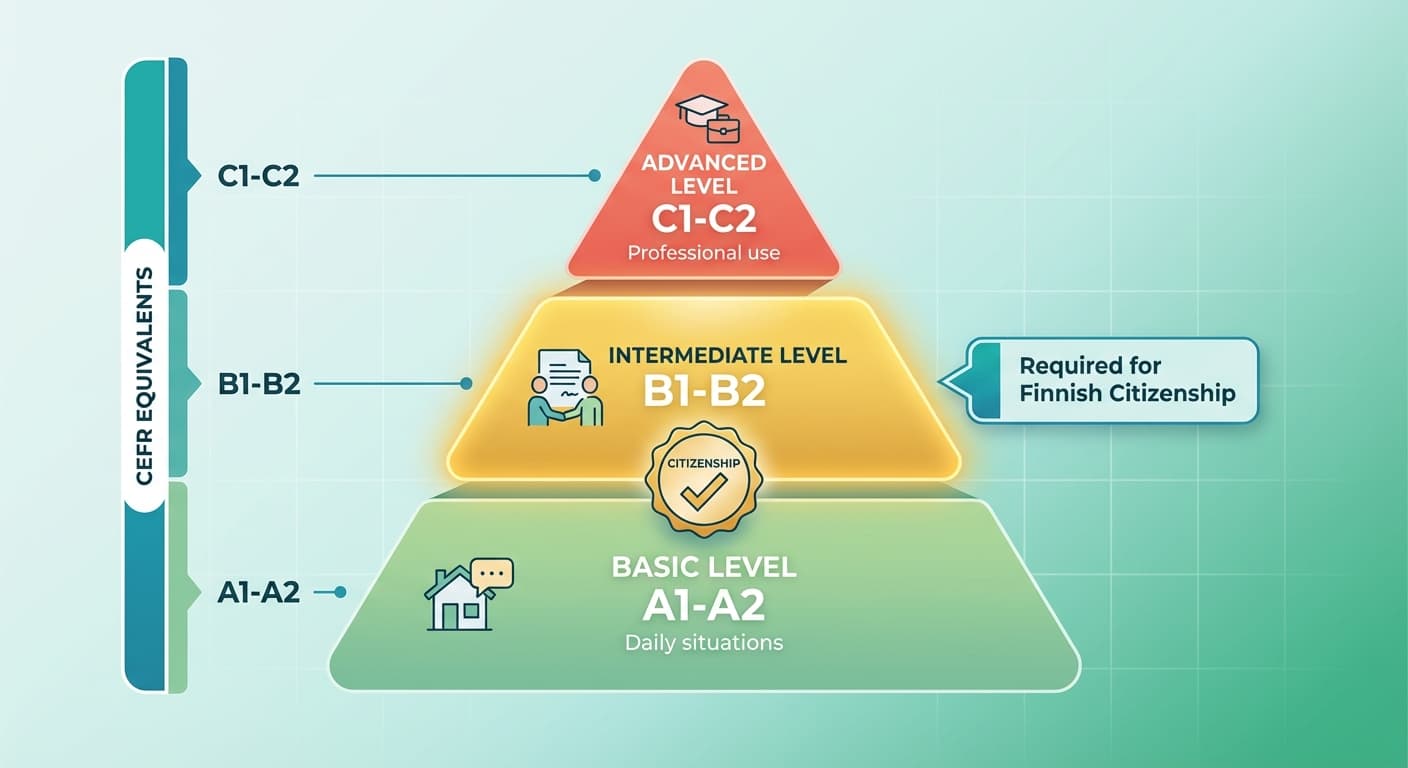
The YKI test has three levels corresponding to the Common European Framework of Reference (CEFR):
🟢 Basic Level (Yki 1-2) – A1/A2 This level demonstrates ability to handle simple everyday situations like shopping, basic conversations, and understanding simple announcements. While useful, this level is not sufficient for Finnish citizenship applications.
🟡 Intermediate Level (Yki 3-4) – B1/B2 This is the most important level for most test-takers. It's required for Finnish citizenship and demonstrates ability to participate in conversations, write clear texts, and understand standard spoken Finnish. Level 3 (B1) is the minimum for citizenship.
🔴 Advanced Level (Yki 5-6) – C1/C2 This level indicates near-native proficiency and is required for certain academic and professional positions, such as teaching in Finnish.
📌 Important: For Finnish citizenship, you need at least Level 3 in all four sections. Scoring below 3 in even one section means you must retake the entire test.
🎯 Strategies for Each Section
1. Reading Comprehension (Tekstin ymmärtäminen)
The reading section is often considered the most manageable because you have time to think and reread. You'll encounter various text types and answer questions about them.
📰 Common Text Types:
- News articles – Current topics like health, environment, society
- Official announcements – City notices, job advertisements, government instructions
- Everyday texts – Advertisements, schedules, user manuals
- Personal texts – Emails, letters, opinion pieces
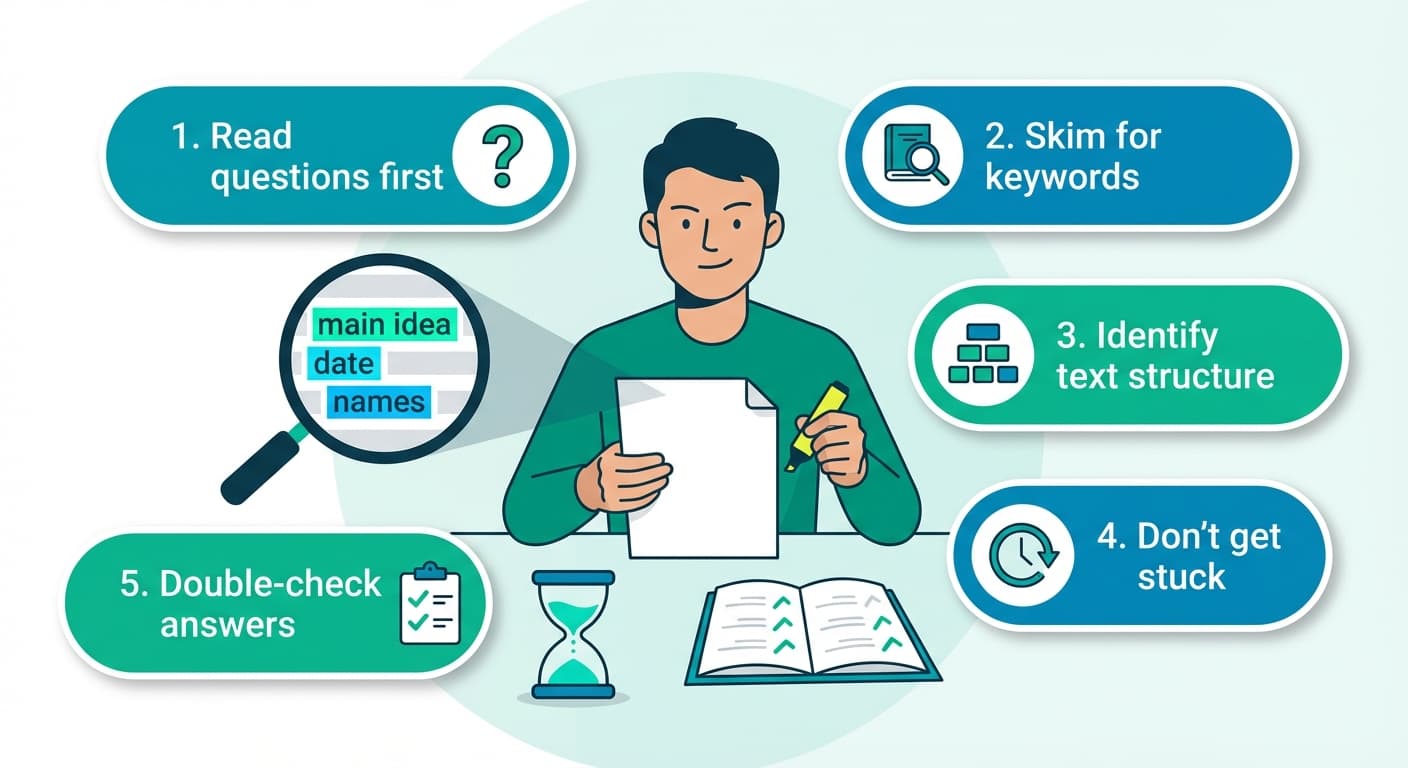
Effective Reading Strategy:
- Read the questions first – This golden rule helps you know what to look for
- Skim the text quickly – Look for keywords related to the questions
- Identify text structure – Headlines and paragraph beginnings often contain key information
- Don't get stuck on unknown words – Use context to understand the overall meaning
- Double-check your answers – If time permits, verify your responses
💡 Pro tip: Practice daily with Yle Selkouutiset (selkouutiset.fi) for beginners, then progress to regular Finnish news sites.
Building Your Vocabulary:
A strong vocabulary is essential for reading success. Here's how to expand it effectively:
- Keep a vocabulary notebook and learn 10 new words daily
- Learn words in context, not as isolated lists
- Use flashcards (Anki or Quizlet) for regular review
- Read about the same topics from different sources
2. Writing (Kirjoittaminen)
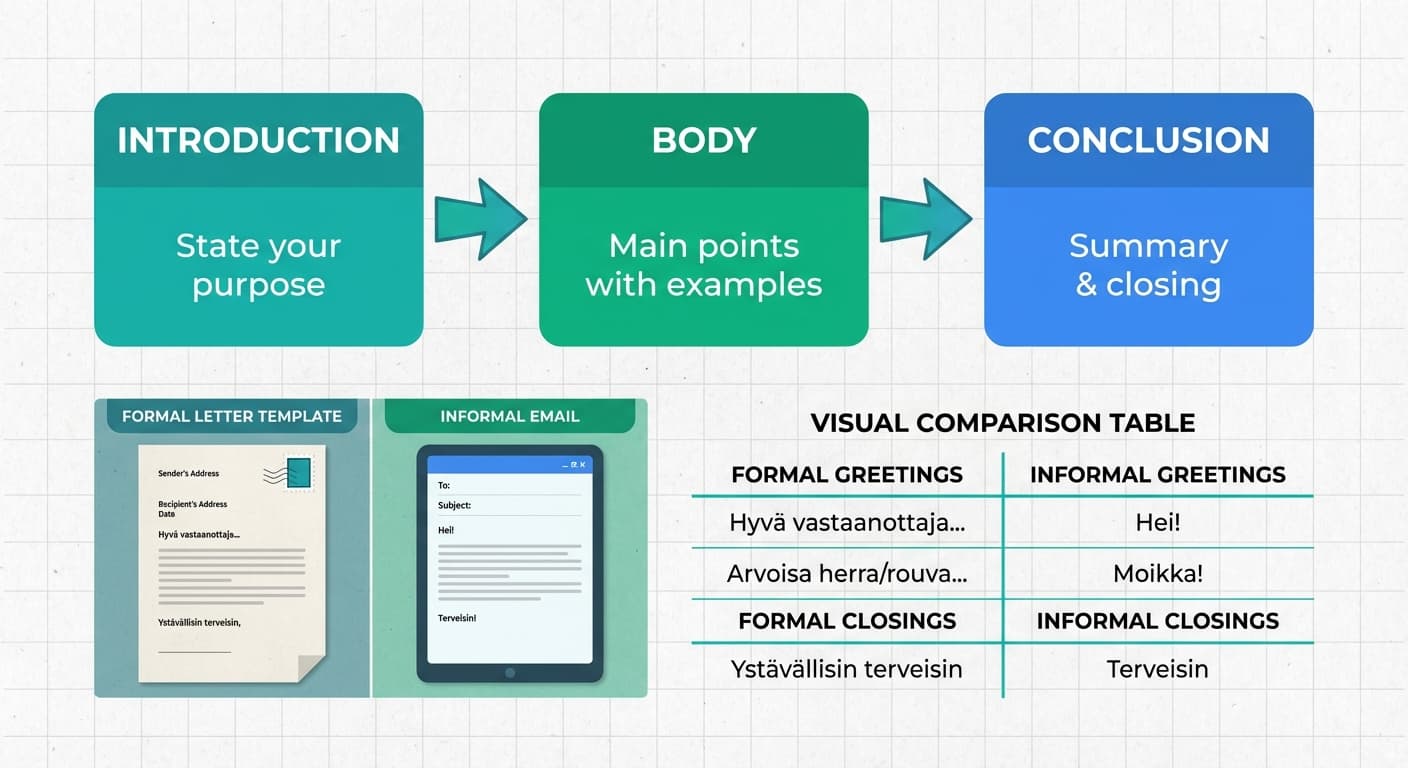
The writing section tests your ability to produce clear, appropriate text. You'll typically write two texts: a shorter one (like an email) and a longer one (like an opinion piece).
📝 Common Task Types:
| Text Type | Length | Register | Example |
|---|---|---|---|
| Informal email | 50-80 words | Casual | Message to a friend about vacation |
| Formal email | 80-100 words | Professional | Complaint to a store |
| Opinion piece | 100-150 words | Neutral | Opinion about school meals |
| Narrative | 100-150 words | Flexible | Description of an event |
Structure of a Good Text:
Every text needs a clear structure:
-
📍 INTRODUCTION (1-2 sentences)
- State what you're writing about
- Formal: Introduce yourself and your purpose
- Informal: Greeting and topic introduction
-
📝 BODY (3-5 sentences)
- Present main points in logical order
- Use transition words: ensinnäkin (firstly), toiseksi (secondly), lisäksi (additionally)
- Provide examples or reasoning
-
🎯 CONCLUSION (1-2 sentences)
- Summary or call to action
- Formal: Polite closing
- Informal: Natural ending
Formal vs. Informal Register:
| Formal | Informal |
|---|---|
| Hyvä vastaanottaja (Dear recipient) | Hei/Moi! (Hi!) |
| Haluaisin tiedustella... (I would like to inquire...) | Kuulin että... (I heard that...) |
| Pyydän ystävällisesti (I kindly request) | Voisitko... (Could you...) |
| Ystävällisin terveisin (Kind regards) | Terkuin / Moikka! (Cheers!) |
💡 Pro tip: Write at least one text daily during your preparation. Ask a Finnish speaker or teacher to review your work.
3. Listening Comprehension (Puheen ymmärtäminen)
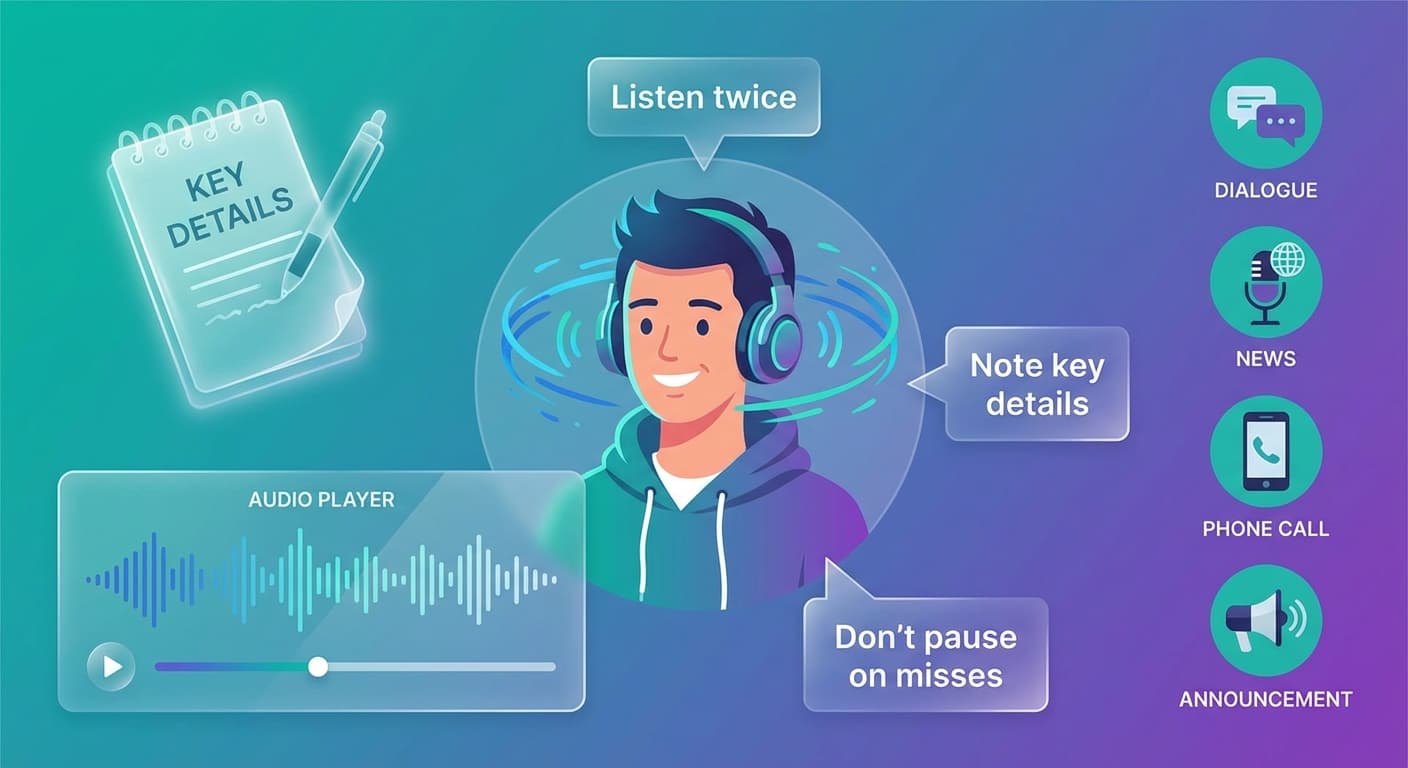
The listening section is often the most challenging because you can't go back like you can when reading. Recordings are typically played twice, so concentration is crucial.
🎧 Types of Recordings and Their Challenges:
Dialogues (Two-person conversations)
- Everyday conversations at shops, doctor's office, workplace
- Challenge: Identifying who says what
- Tip: Focus on the speaker relevant to the question
Monologues (Single-speaker recordings)
- News, announcements, presentations
- Challenge: Long texts with lots of information
- Tip: Take notes on key points
Phone calls and messages
- Voicemail messages, customer service calls
- Challenge: Numbers, names, dates
- Tip: Write numbers down immediately
Effective Listening Strategy:
- Read questions before listening – Know what to listen for
- First listen – Understand the overall context
- Second listen – Verify details and answers
- Don't get stuck – If you miss something, move on
Practice Resources:
- Listen to Yle Areena daily (news, documentaries, radio programs)
- Start with selkouutiset and progress to regular programming
- Listen to Finnish podcasts (e.g., Historiapodcast, Jakso)
- Watch Finnish TV shows and movies with Finnish subtitles
4. Speaking (Puhuminen)
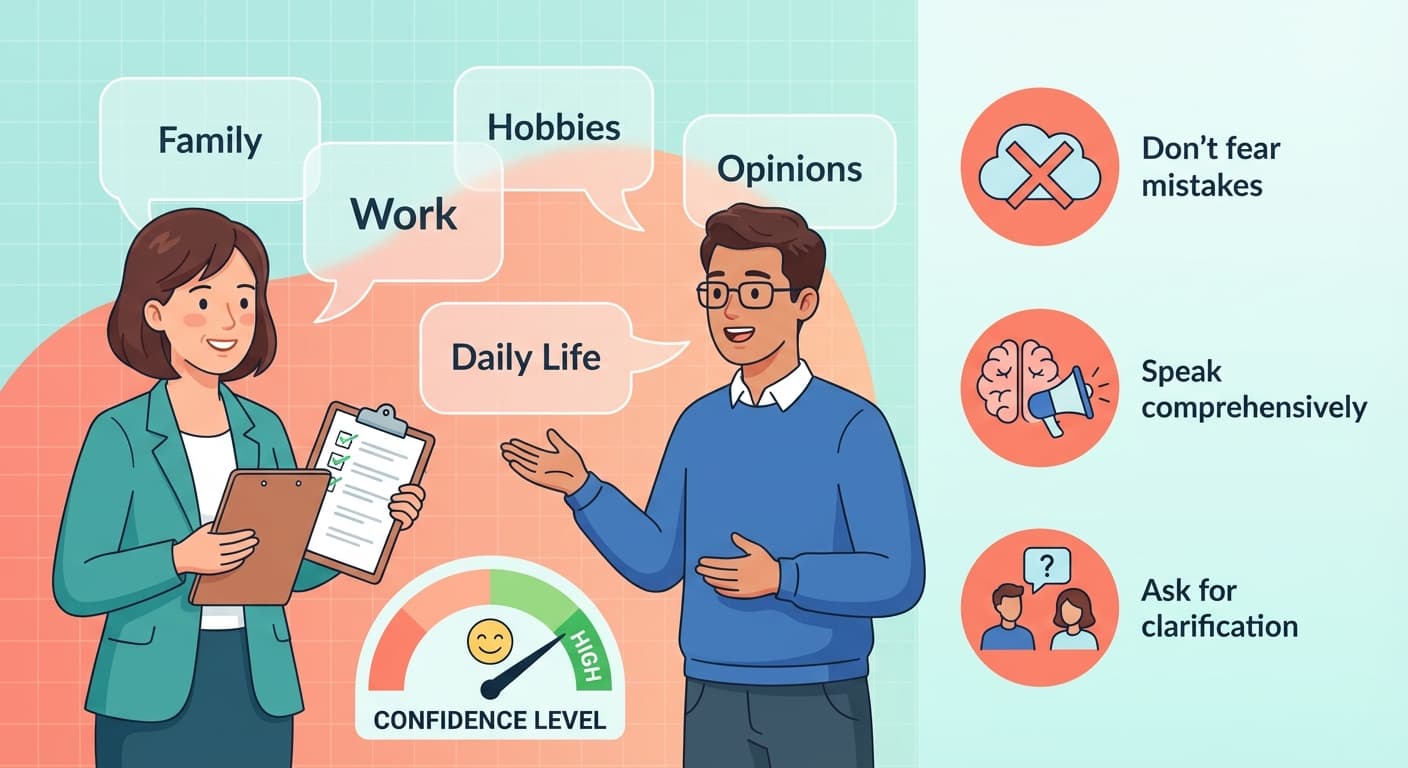
The speaking section is conducted as a one-on-one interview with an examiner. While it may feel intimidating, good preparation will help you succeed.
🎤 Typical Task Types:
- Self-introduction – Tell about yourself, family, work
- Picture description – Describe what you see in an image
- Situation handling – e.g., "You're at the doctor's, describe your symptoms"
- Expressing opinions – What do you think about topic X?
- Making plans – Suggest and justify a plan
Keys to Success:
🎤 Remember: Examiners aren't looking for perfect grammar! What matters most is getting your message across and demonstrating communication ability.
Practical Tips:
- Don't fear mistakes – Correct yourself and continue
- Speak long enough – Give comprehensive answers, not one-word responses
- Use transition words – no (well), niin (so), sitten (then), koska (because)
- Ask for clarification – "Anteeksi, voitteko toistaa?" (Sorry, could you repeat?) is allowed
- Maintain conversation flow – Ask something back if appropriate
Practice Topics:
Prepare to speak about:
- Your family and friends
- Your work or studies
- Hobbies and free time
- Housing and your city
- Health and wellbeing
- Finnish weather and seasons
- Holidays and traditions
📈 8-Week Study Program
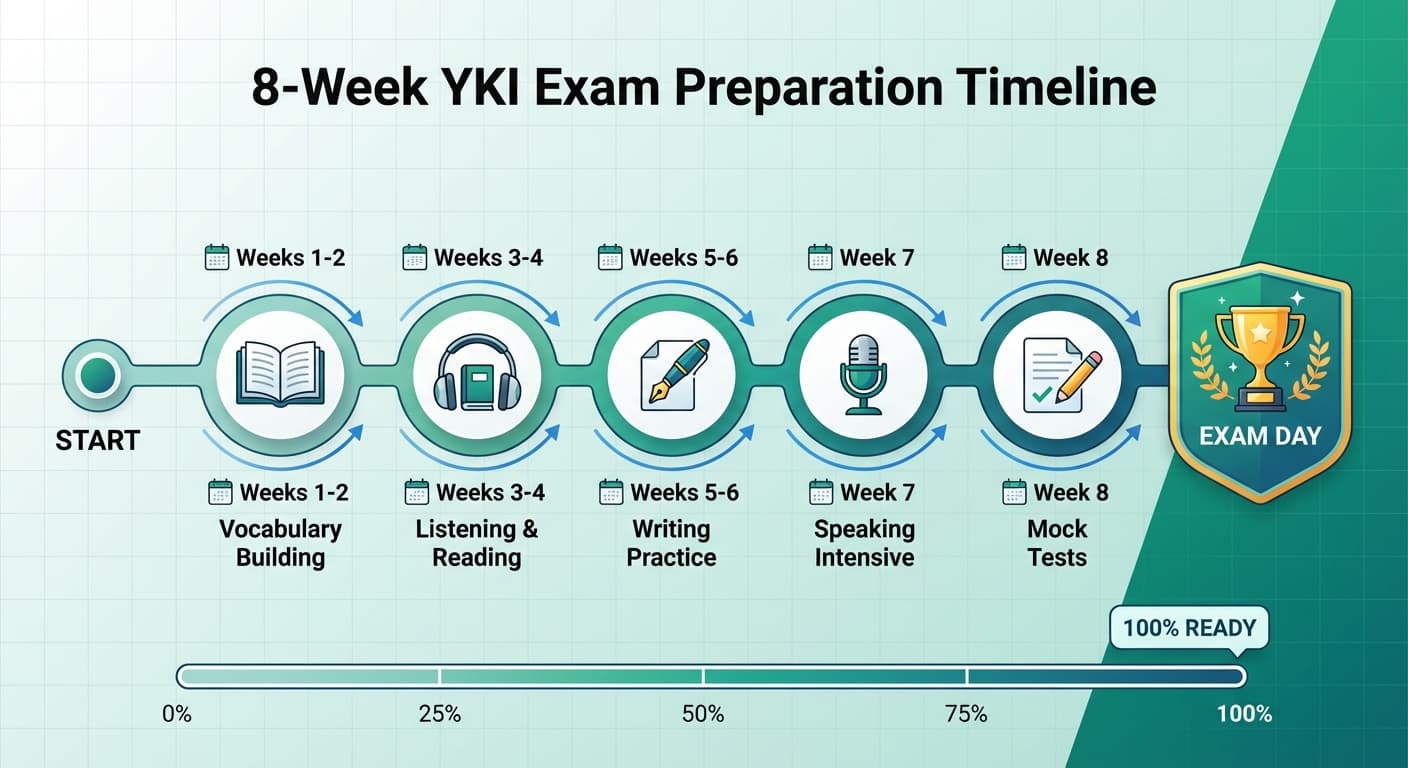
Systematic preparation is key to success. Here's a proven 8-week program:
| Week | Focus | Daily Time | Weekly Goal |
|---|---|---|---|
| 1-2 | Vocabulary building | 30-45 min | 150 new words |
| 3-4 | Listening and reading | 45-60 min | 10 exercises |
| 5-6 | Writing | 60 min | 10 texts |
| 7 | Speaking | 60-90 min | Daily practice |
| 8 | Review + mock tests | 60-90 min | 2 full practice tests |
Weeks 1-2: Building the Foundation
Focus on vocabulary building by themes:
- Week 1: Home, family, work, studies
- Week 2: Health, services, travel, free time
Weeks 3-4: Receptive Skills
Practice listening and reading together:
- Read a news article, then listen to a podcast on the same topic
- Practice answering comprehension questions
Weeks 5-6: Productive Skills
Write every day, alternating between:
- Informal emails
- Formal messages
- Opinion pieces
Week 7: Speaking Intensive
Intensive speaking practice:
- Speak aloud to yourself for 30 minutes daily
- Record yourself and listen back
- Practice with a partner if possible
Week 8: Final Review
Complete 2 full practice tests under timed conditions.
✅ Exam Day Checklist
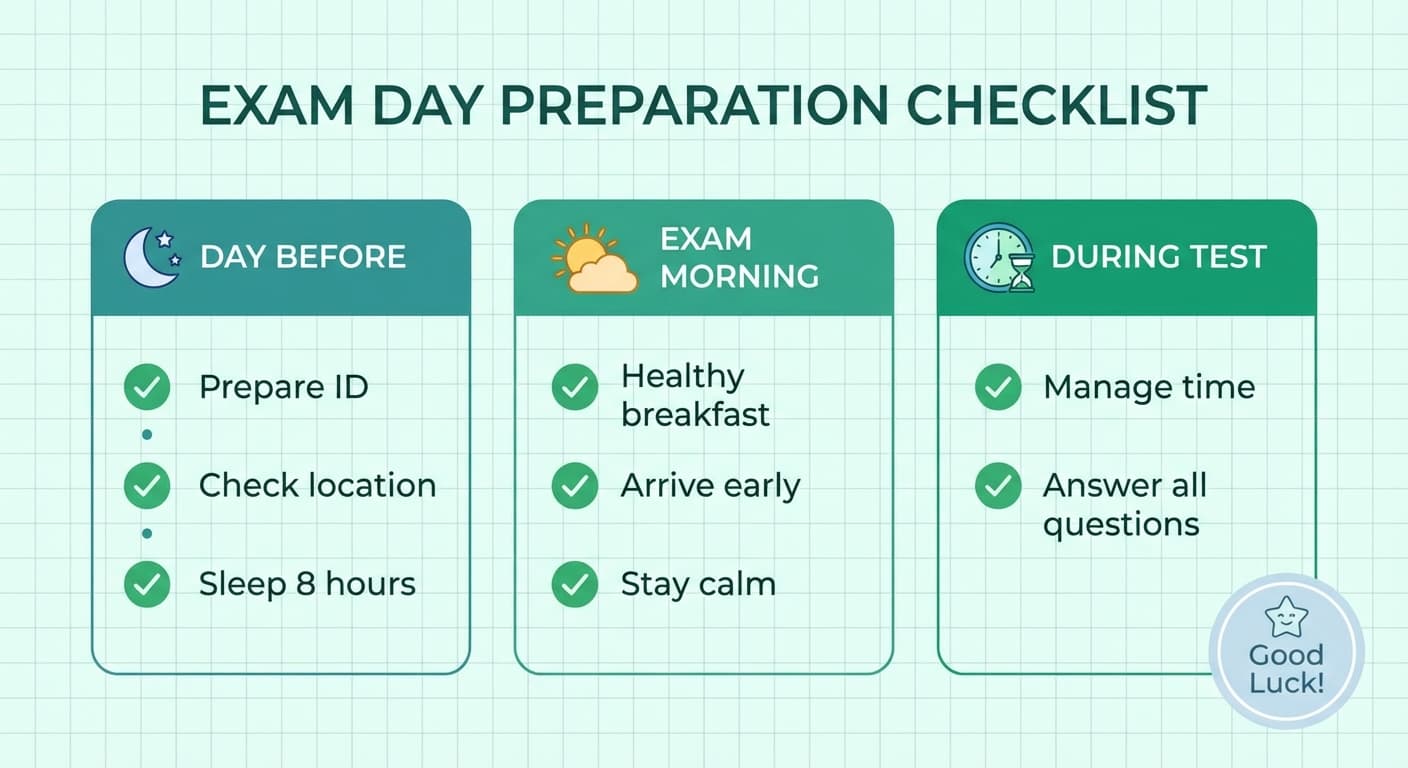
Prepare thoroughly for exam day:
The Day Before:
- ✓ Prepare your ID (passport or identity card)
- ✓ Check the test location and route
- ✓ Lay out your clothes
- ✓ Don't over-study – light review is enough
- ✓ Sleep at least 8 hours
Exam Morning:
- ✓ Eat a healthy breakfast
- ✓ Leave early – arrive 30 minutes before
- ✓ Bring your ID
- ✓ Drink water, but not too much
- ✓ Breathe deeply and stay calm
During the Test:
- ✓ Read instructions carefully
- ✓ Manage your time – don't get stuck on one task
- ✓ Answer all questions
- ✓ Review your answers if time permits
🚀 Start Your Preparation with YKI Trainer
YKI Trainer is designed specifically for people who want to pass the YKI test. You'll get:
- ✨ Personalized exercises – AI adapts to your level
- 📊 Instant feedback – See immediately where to improve
- 📈 Progress tracking – Monitor your development over time
- 🎧 Authentic recordings – Practice listening with realistic materials
Summary
Passing the YKI test requires systematic preparation and the right strategies. Remember these key points:
- Understand the test structure – Know what to expect in each section
- Practice all areas – Don't neglect any section
- Expand your vocabulary – This helps in all sections
- Use the right resources – YKI Trainer is designed for this purpose
- Take care of yourself – Rest and nutrition matter
- Trust yourself – You've prepared, you're ready!
Good luck on your YKI test! 🇫🇮